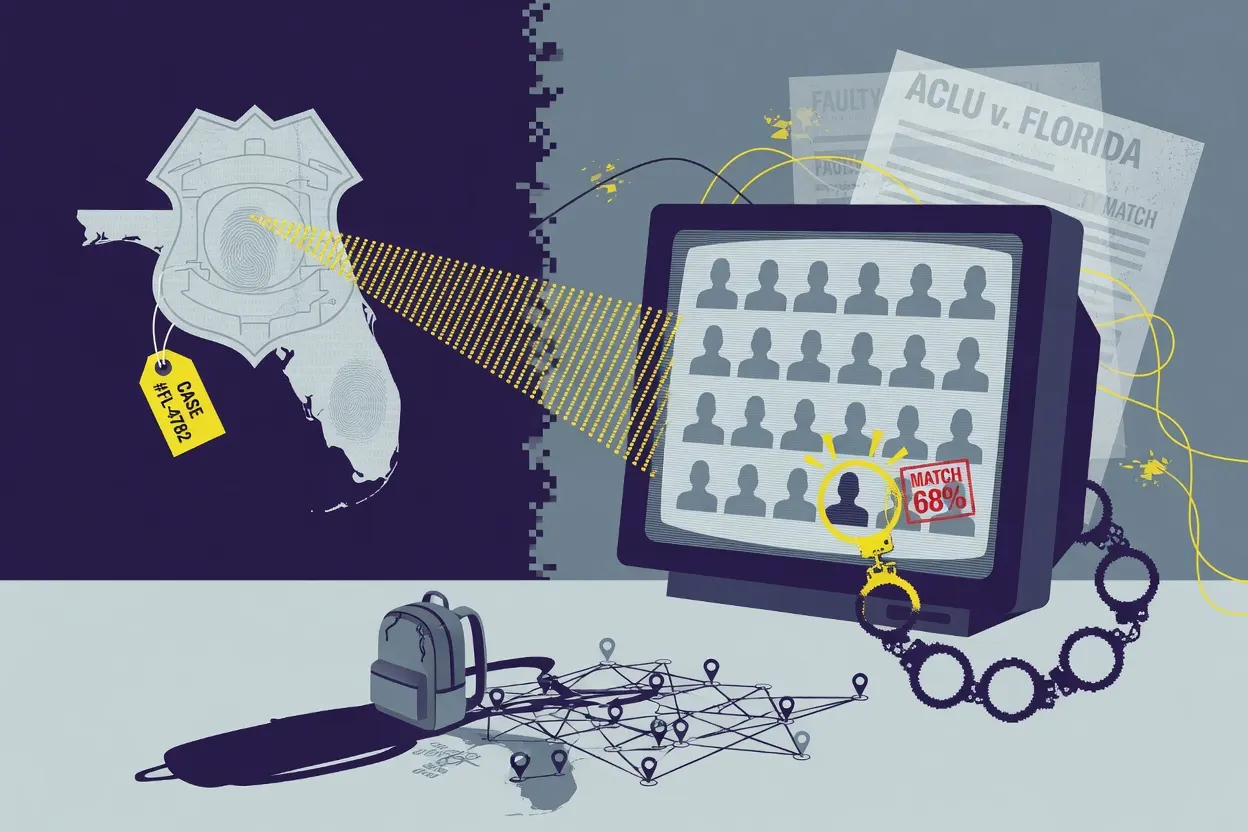
Florida police arrested the wrong man in a child-abduction case because a face-recognition algorithm returned a match — and apparently stopped investigating there.
The ACLU has filed suit against two Florida police departments over the arrest of a Fort Myers man tied to a child-abduction investigation. According to the civil liberties group, officers treated a flawed face-recognition hit as near-certain identification rather than as the probabilistic lead the technology actually produces. The case centers on one of the oldest face-recognition systems in active use by U.S. law enforcement. The lawsuit argues the departments failed to apply basic verification steps before making an arrest.
Wrongful arrests linked to face recognition have been documented across the United States before, typically ending in dropped charges and quiet settlements rather than enforceable legal precedent. This lawsuit takes a different approach: it targets departments that have operated the technology long enough to have fully internalized its error rates — and argues they chose not to act on that knowledge. A ruling for the ACLU could set a precedent that a lone algorithmic match, without independent corroboration, is not legally sufficient grounds for arrest.
Courts have been slow to constrain face-recognition use by law enforcement; legislatures have been slower still. The technology's oldest institutional users have had more time than anyone to learn what it gets wrong. That, it seems, is the ACLU's theory of liability.