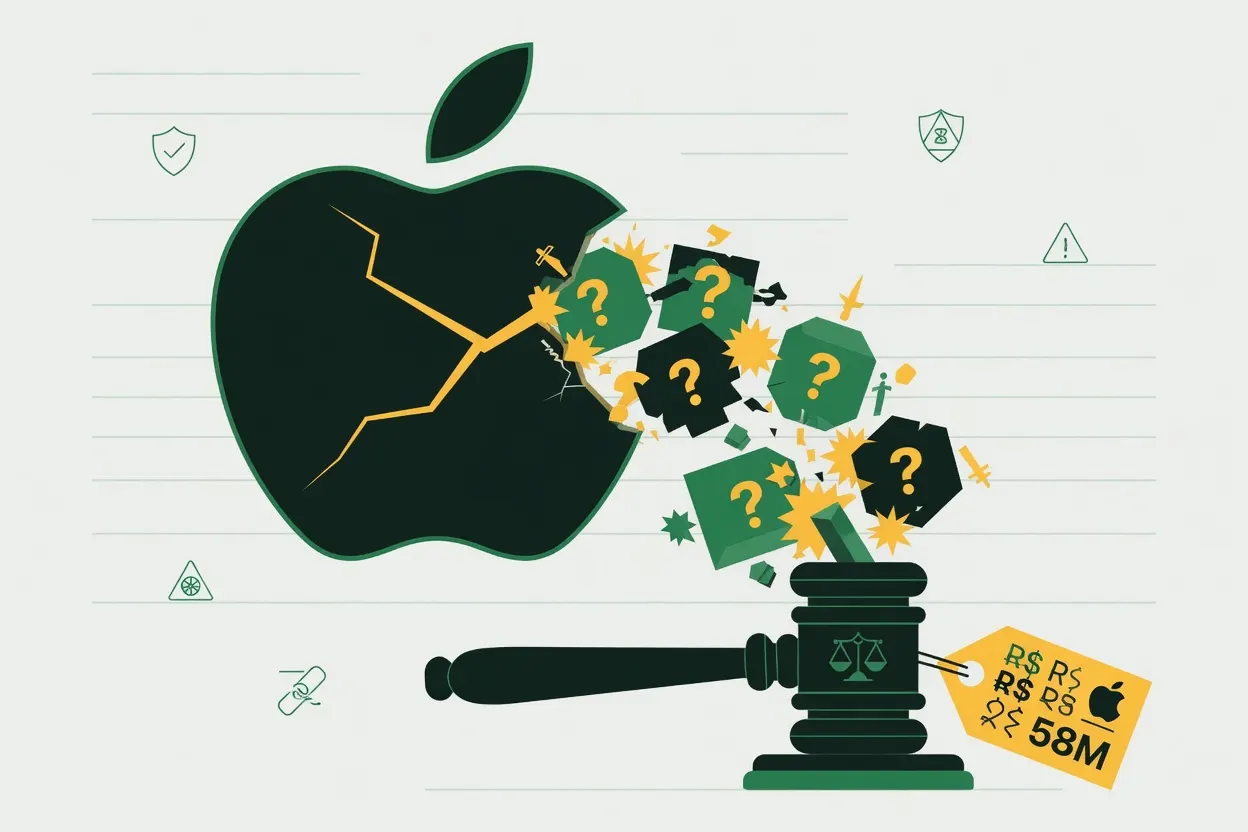
Brazil has ordered Apple and several other companies to pay a combined nearly $60 million over loot boxes in games accessible to minors.
A Brazilian court found the companies liable for distributing or enabling randomized in-game purchases in titles reachable by minors. Loot boxes are a mechanic where players pay real money for a randomized chance at in-game rewards — a structure regulators in multiple countries have compared to gambling. Apple's exposure traces directly to its role as App Store gatekeeper; courts have increasingly treated that position as a point of accountability rather than a neutral pass-through. The judgment covers Apple alongside several unnamed co-defendants, though how the nearly $60 million is apportioned was not specified in initial reporting.
The ruling matters beyond its dollar amount. Brazil is one of the world's largest mobile gaming markets, and a judgment that puts a platform — not just a game studio — on the hook for loot box mechanics sets a precedent other jurisdictions will study. Belgium banned loot boxes outright in 2018; the UK and Netherlands have pushed for age restrictions; Brazil's action signals the pressure is no longer a European corner case. App stores are now explicitly in the crosshairs alongside the developers they host.
Whether $60 million registers as a deterrent for Apple, a company that generates roughly that sum in revenue every two hours, is the obvious skeptical aside — the legal precedent is almost certainly the bigger long-term concern.