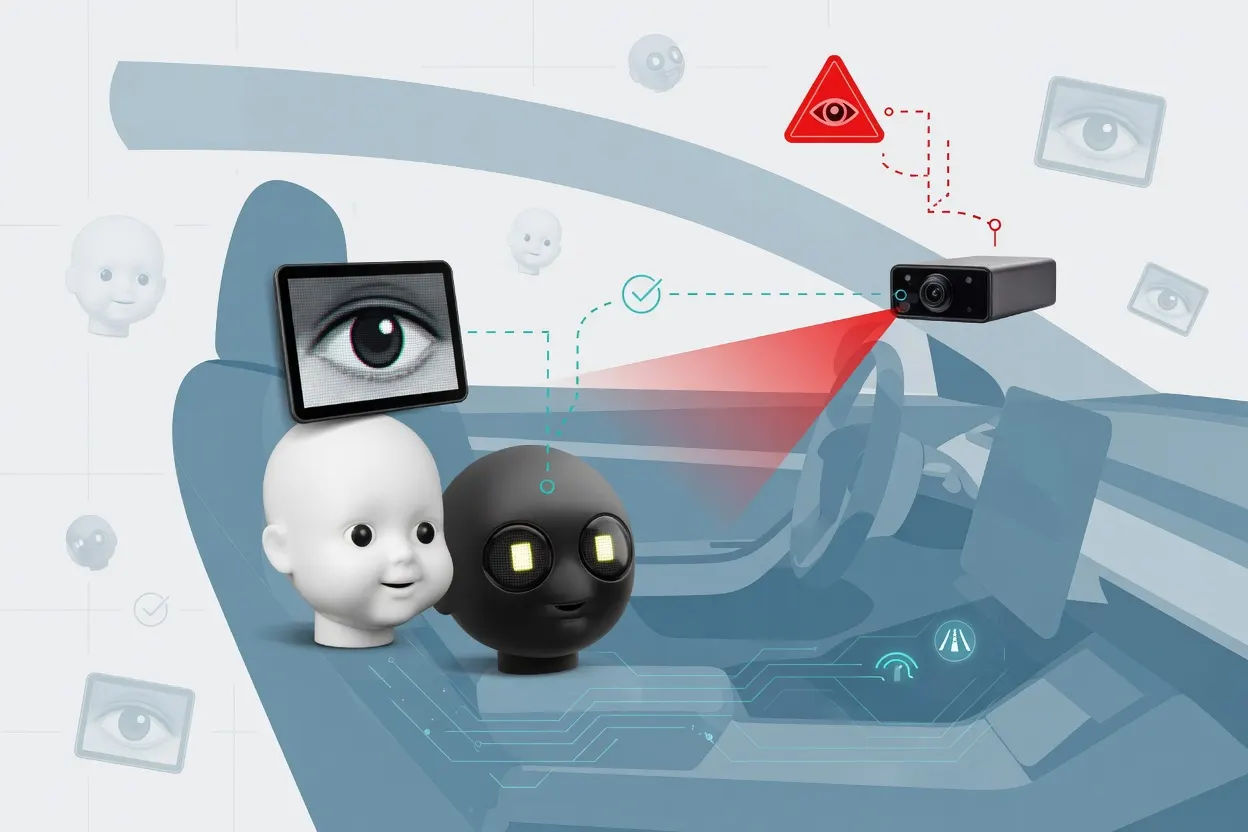
Chinese Tesla owners are reportedly fooling Autopilot's driver-monitoring cameras with miniature doll heads, printed photos, and blinking screens.
The workarounds target the gaze-detection camera meant to verify that a human is watching the road. Tesla moved to camera-based interior monitoring because it was supposed to be harder to defeat than earlier torque-sensor systems, where drivers could fool the car with a weight clipped to the steering wheel. A toy-store doll head has apparently reached similar effectiveness at a fraction of the effort.
Driver monitoring is the main technical barrier keeping Autopilot from becoming an unattended road trip. If the camera can be satisfied with a plastic face, the safety guarantee is shakier than the feature's marketing suggests — and it signals a persistent gap between what drivers want Autopilot to do and what the technology can responsibly deliver.
The evolution from weighted steering wheels to blinking doll eyes is, at minimum, creative. It is not progress.