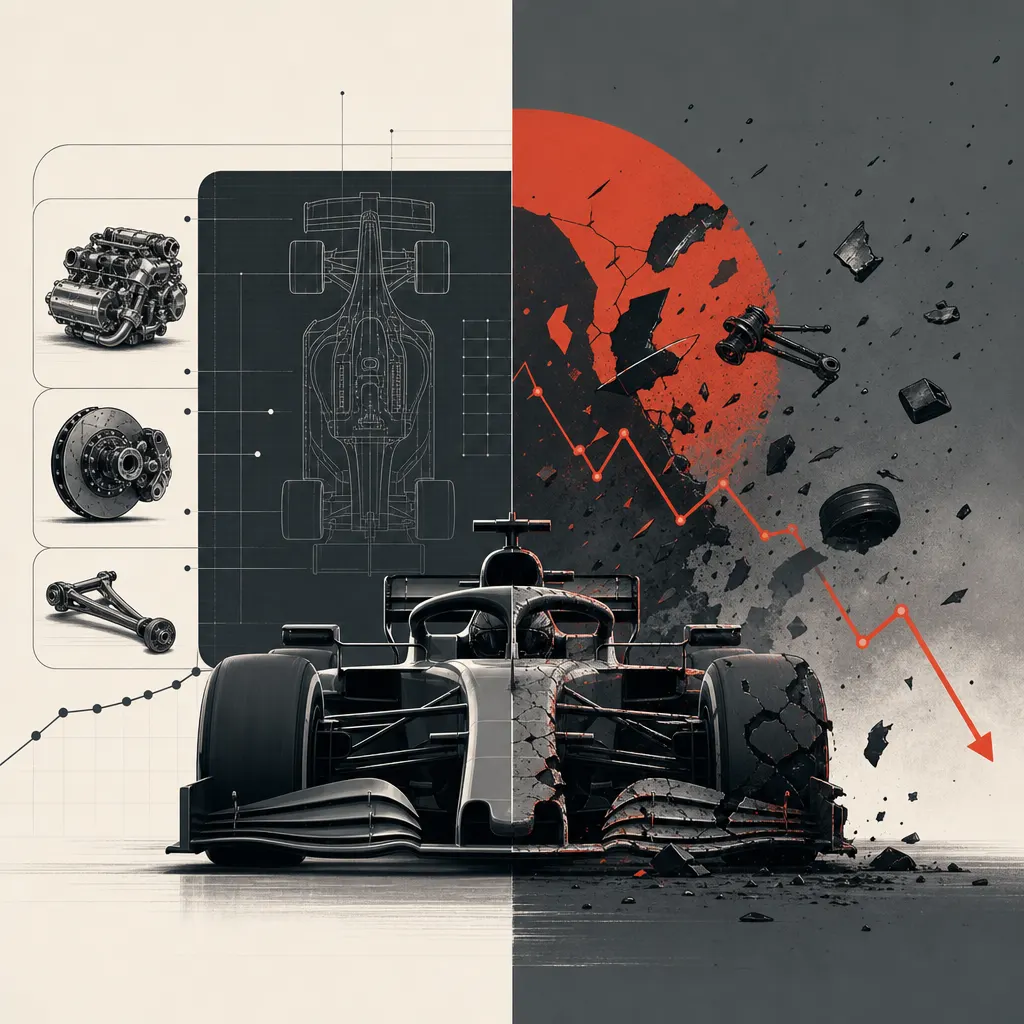
Formula 1's years-long reliability streak has ended.
For much of recent memory, the sport quietly engineered mechanical drama out of its races — teams got good enough at building cars that the focus shifted from survival to pace. That changed in 2026. In less reliable eras, a driver had roughly a six-in-ten chance of seeing the checkered flag; the sport spent years pushing that number toward something closer to certainty. The new regulation cycle has started unwinding that progress.
When reliability crumbles, it reshapes championships in ways raw speed cannot. A car that fails to finish scores nothing, and as failure rates climb, avoiding retirement becomes a strategic variable alongside tire choices and pit-stop windows — a wrinkle the sport had spent years ironing out.
Every major rule overhaul brings a shakedown period, and teams usually converge on reliability within a season or two. Whether 2026 follows that pattern or signals something more structural is the question engineers are now racing to answer.