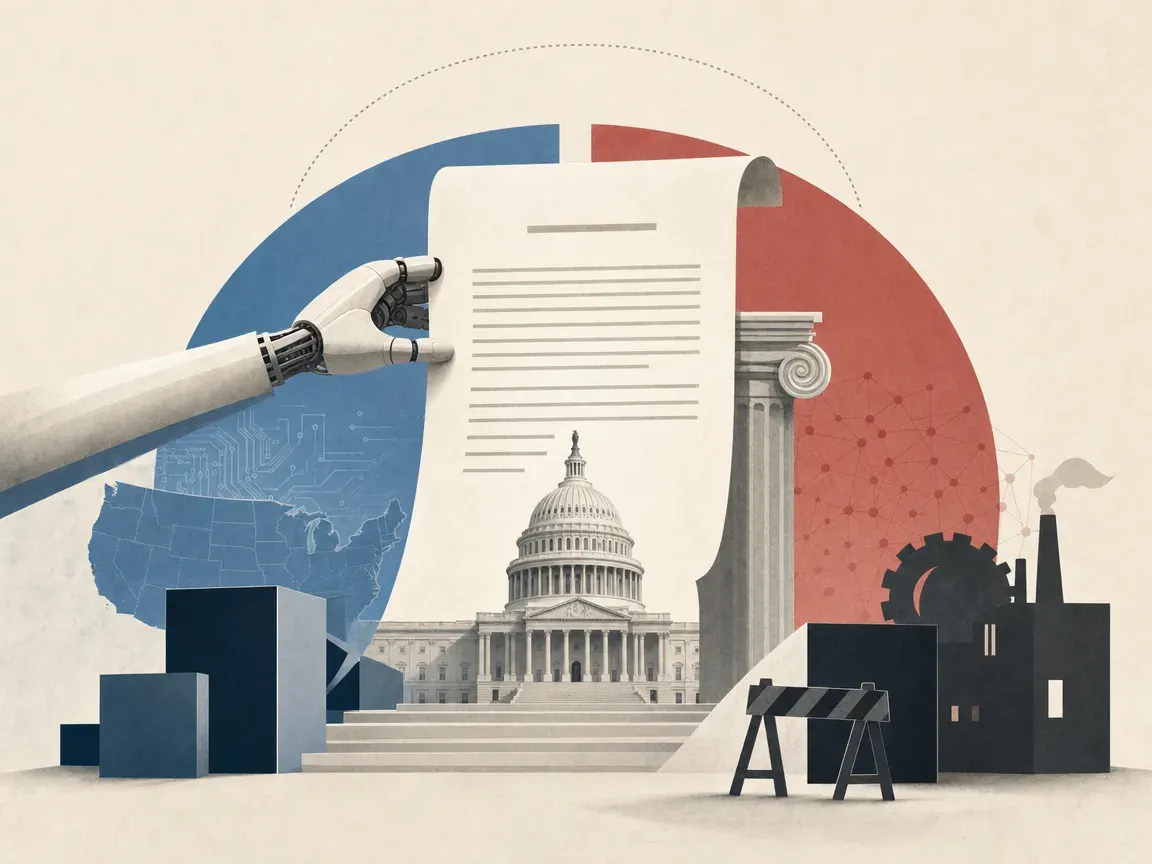
A House draft bill would hand the federal government exclusive authority over artificial intelligence regulation, blocking states from passing or enforcing their own rules.
Lawmakers released the proposal as a draft — not yet formally introduced or voted on. The bill would prohibit state governments from regulating AI, a sweeping preemption that would override existing state laws and prevent new ones from taking effect. The timing matters: several states have moved aggressively to fill the regulatory vacuum left by years of Congressional inaction on AI, and some of that legislation is already on the books.
For the past several years, states have been the primary engine of AI oversight in the US — not because anyone planned it that way, but because Washington hadn't. Preempting that patchwork doesn't simplify a complicated situation so much as it eliminates it, leaving enforcement to a federal government that has yet to demonstrate the appetite or the infrastructure to do the job at scale.
Tech companies have lobbied hard for federal preemption as a way to avoid navigating 50 different state regimes. This draft is close to exactly what they asked for — worth keeping in mind when evaluating how protective of the public it is likely to be.