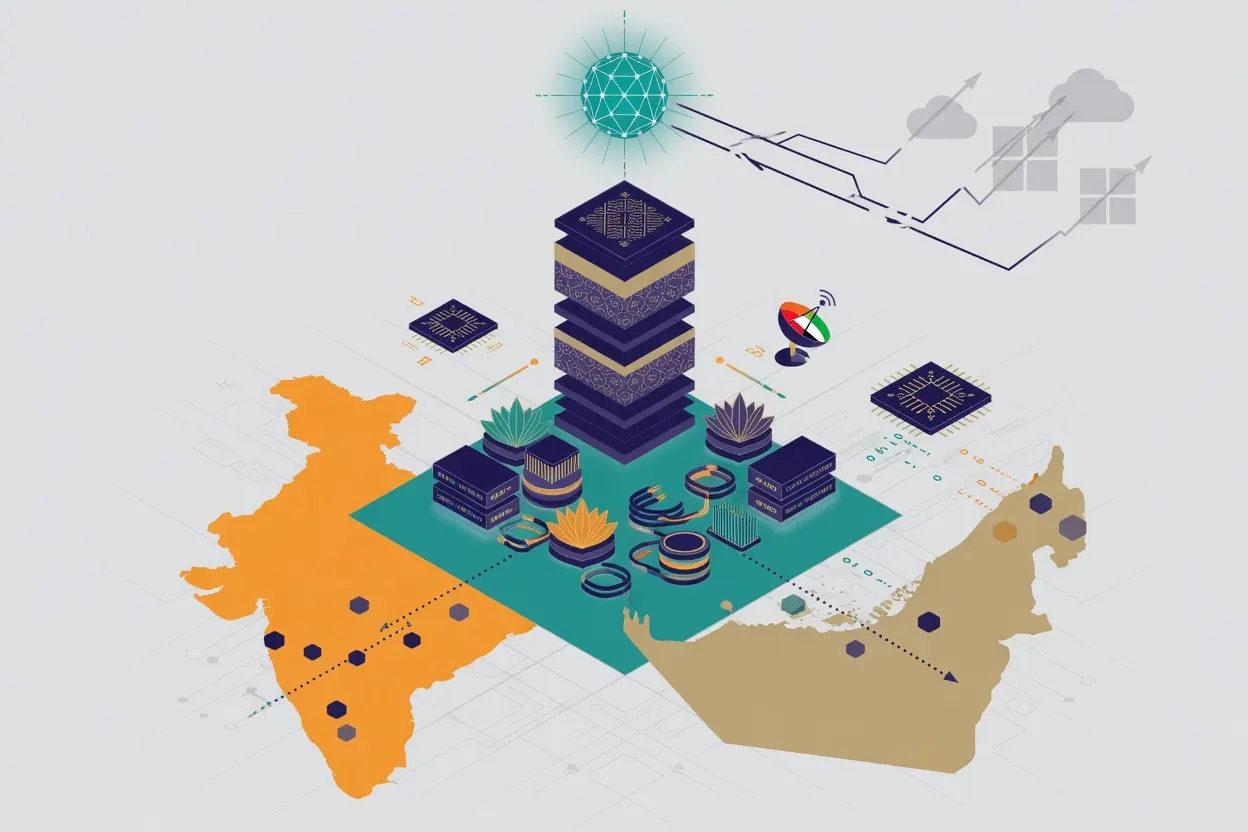
India and the UAE have struck an AI sovereignty deal, bringing together G42 and Cerebras to build compute infrastructure outside the Google and Microsoft ecosystem.
The two countries are developing shared AI infrastructure through G42, Abu Dhabi's state-backed AI company, and Cerebras, the US chipmaker known for its wafer-scale processors. The arrangement is framed explicitly as a way to reduce dependence on American hyperscalers for AI workloads. Sovereign compute — the idea that nations should control the hardware their AI runs on — has become a serious policy priority across the Global South, and this deal is one of the more concrete examples of that impulse turning into signed agreements.
For India, this fits a longer pattern of digital self-reliance: the country has already built its own payments stack and identity infrastructure, and is now reaching for AI infrastructure it doesn't have to license from Silicon Valley. For the UAE, G42 has positioned itself as a vehicle for Abu Dhabi's global AI ambitions — though the involvement of Cerebras, a California company, means "sovereignty" here is a relative term rather than an absolute one.
The irony of building AI sovereignty with an American chip company is either a pragmatic workaround or evidence that true compute independence remains years away from being achievable.