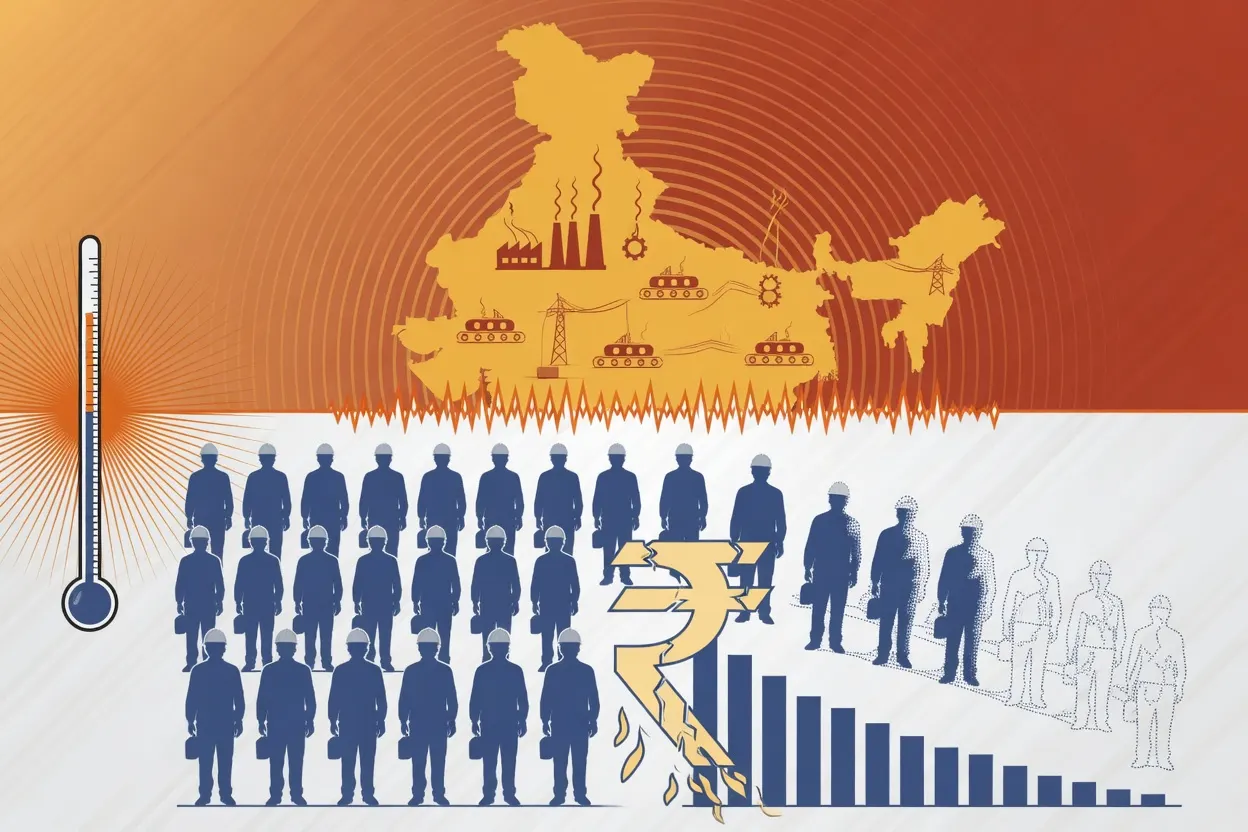
India's brutal heat waves are stripping productive hours from the workday and real money from the economy.
A recent investigation found that extreme temperatures are doing measurable damage to India's workers and broader output. The country's enormous outdoor labor force — construction crews, farmworkers, delivery drivers — faces a hard physiological ceiling: past certain temperatures, sustained work becomes dangerous or impossible. That's not a weather event. It's a structural limit on labor supply that recurs every summer, grows more severe as averages rise, and falls disproportionately on workers with no air-conditioned alternative.
India is one of the world's fastest-growing large economies, and that growth depends heavily on sectors where people work outside. When heat curbs labor hours, the GDP hit isn't a rounding error — it compounds across agriculture, logistics, and construction simultaneously. Most mainstream economic forecasts still treat climate disruption as a tail-risk input rather than a baseline variable.
The uncomfortable implication: growth projections that don't price in "too hot to work" days are probably wrong, and getting more wrong each year.