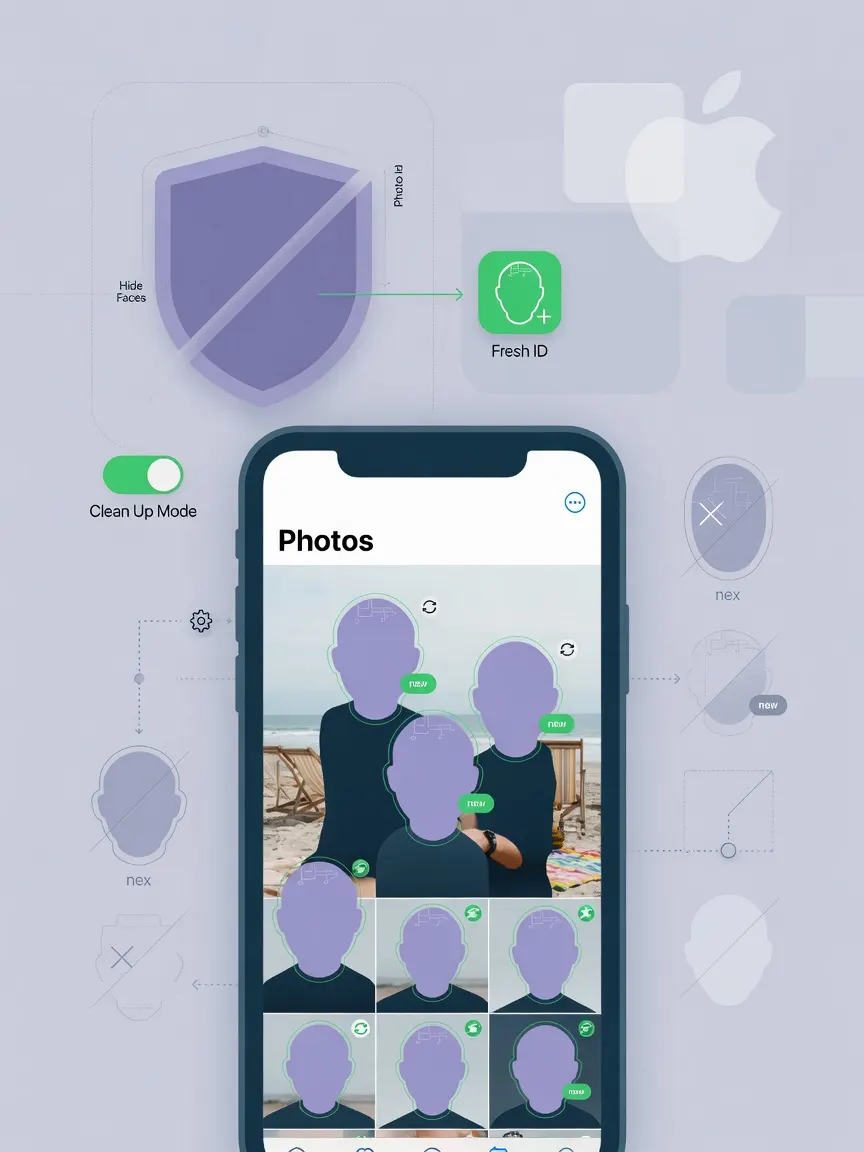
Apple's updated Clean Up tool in iOS 27 no longer blurs faces — it generates new ones instead.
Apple overhauled its Clean Up photo-editing tool in iOS 27, sharpening its ability to remove unwanted objects from images. The upgrade appears to have broken the hide-faces function in the process. Rather than obscuring a face with a blur or pixelation effect, the tool now synthesizes a replacement face and places it over the original. The person in your photo is still there, just wearing a face that never existed.
Blurring a face and replacing it are not the same thing. Blur is a redaction signal that tells viewers something has been hidden; a synthetic replacement creates a plausible image of a person who never existed, with no visible indication that anything was changed. For anyone using this feature to protect a subject's identity — in protest photos, journalism, or ordinary social sharing — that difference has real stakes.
Apple hasn't said whether this is a bug or a feature — and for a company that markets itself heavily on privacy, that silence is worth noting.