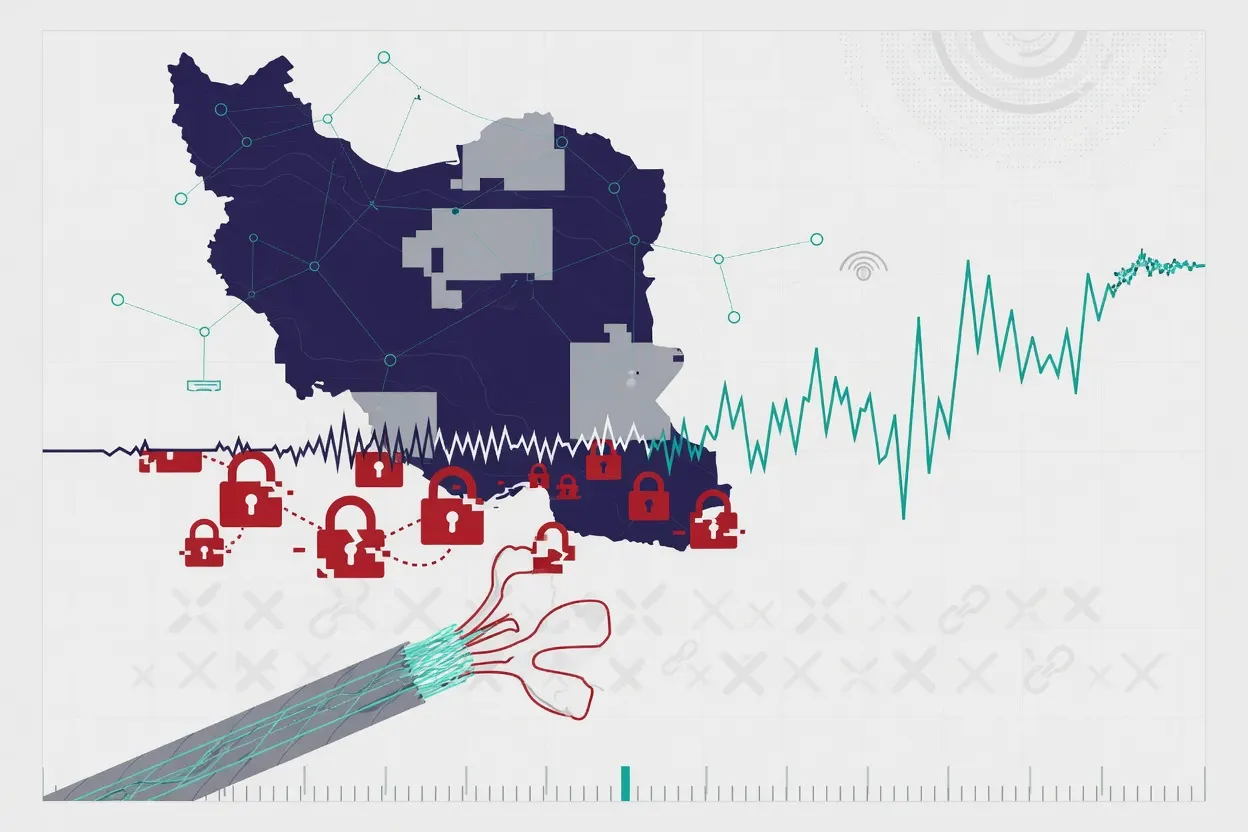
Iran restored internet access after 88 consecutive days of a national blackout - but rights organizations are not treating it as good news.
Iranian authorities began reconnecting the country to the global internet, ending what observers describe as one of the longest sustained national shutdowns in recent memory. The restoration is incomplete: access has returned for some users, services, or regions, but not all. Mahsa Alimardani of the human rights organization WITNESS was unambiguous about how to read the moment, saying that "celebrating this partial restoration is not right." Internet experts are already warning that a future cutoff "will happen again."
An 88-day blackout is not a blunt instrument deployed in a moment of panic. It is evidence that a government has built, tested, and refined the systems required to sever a country from the global internet for months at a time. Iran has done this before, in shorter bursts; the duration here suggests those systems have matured and that the government has concluded the political and economic costs are manageable. What returns when connectivity is restored is not the status quo - businesses, journalism, and diaspora connections don't simply snap back.
The infrastructure enabling the blackout - a centralized architecture designed precisely for this kind of control - remains in place. So does the government that built it.