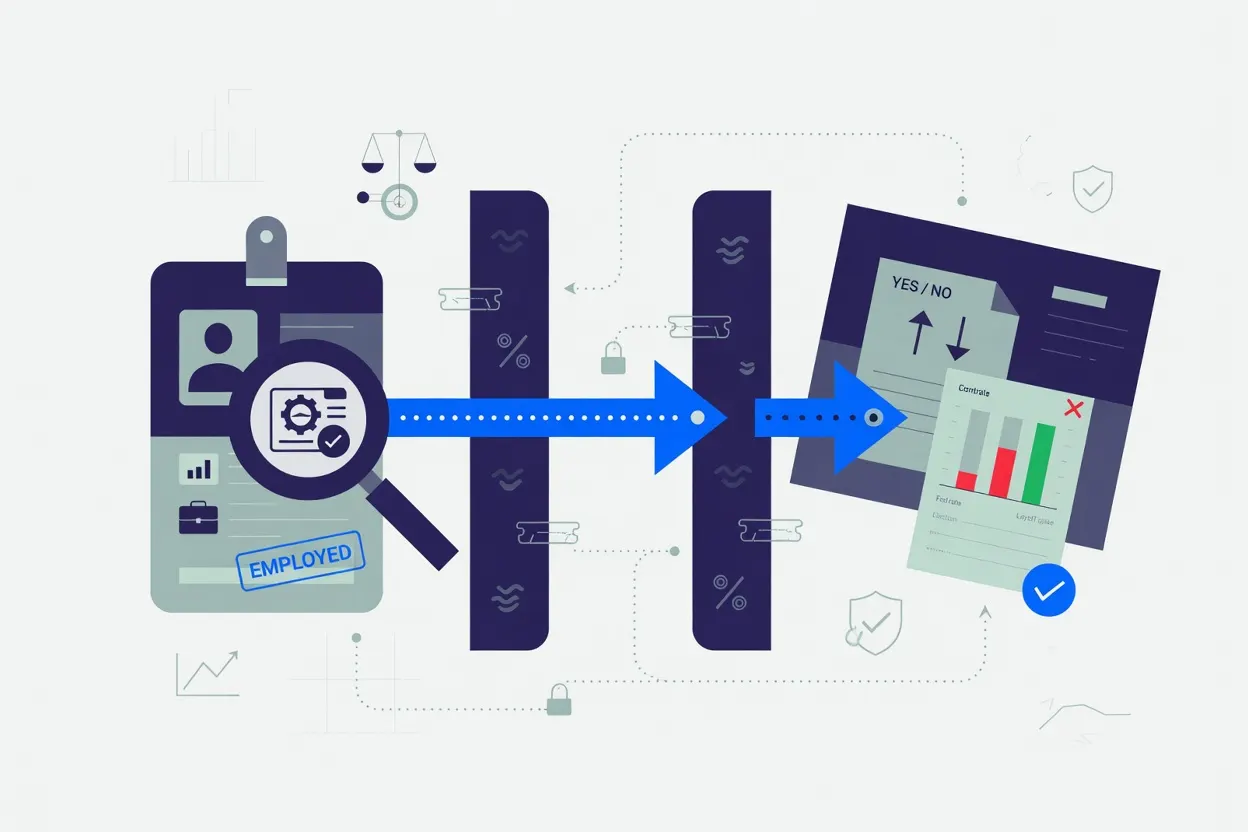
Kalshi is now asking some users to prove where they work before placing certain bets.
The prediction market platform announced it would require employment verification for select contracts - a response, presumably, to a growing stack of arrests tied to alleged insider trading on bets involving military operations, Google Search data, and other non-public information. The CFTC is moving in parallel, drafting its first formal rules for prediction markets. The proposed framework would evaluate whether contracts involve activities enumerated under the Commodity Exchange Act - terrorism, assassination, war, gaming, or conduct unlawful under federal or state law - and if so, whether they run against the public interest.
Employment verification is a real signal, but a narrow fix for a wide problem. Knowing a user works at a federal agency doesn't stop them from betting; it just creates a paper trail if something goes wrong later. The harder question - what actually constitutes insider trading in a market explicitly built to reward superior information - remains unanswered, and the CFTC's rulemaking timeline means more arrests will likely arrive before any rules do.
Prediction markets have long marketed themselves as neutral aggregators of dispersed public knowledge. The pattern of recent arrests suggests some participants had a looser definition of "public."