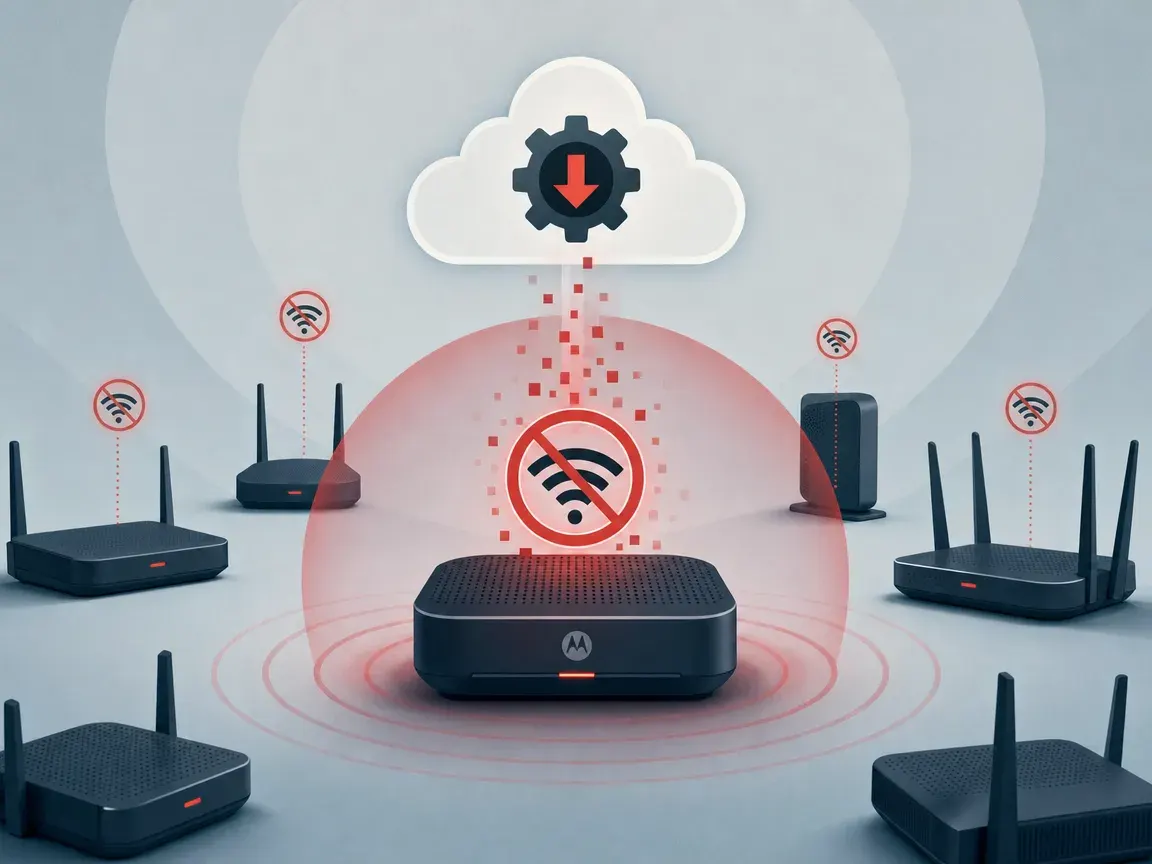
Motorola's entire WiFi router lineup stopped working after the company's MotoSync Plus app went offline. No warning was issued. No explanation was given.
The MotoSync Plus app, which Motorola's router line requires for management, went dark. Without it, the routers themselves stopped functioning. Not a hardware fault, not a firmware bug. A remote service Motorola controls simply became unreachable. The company offered no public statement about why the outage happened or when service would return, leaving customers without internet through no fault of their own hardware.
This is a clean illustration of cloud-dependency risk: consumer hardware that cannot function without the vendor's servers is hardware the vendor can disable at any time, intentionally or not. Routers occupy a uniquely critical position in a home network, making them a worse candidate for this model than almost any other device. When a smart bulb dies because its cloud disappears, it's annoying; when a router does, everything downstream goes with it.
Motorolais not unique in shipping cloud-dependent networking gear, which is precisely the problem. The industry has normalized a failure mode that hands vendors an accidental kill switch over infrastructure their customers assumed they owned outright.