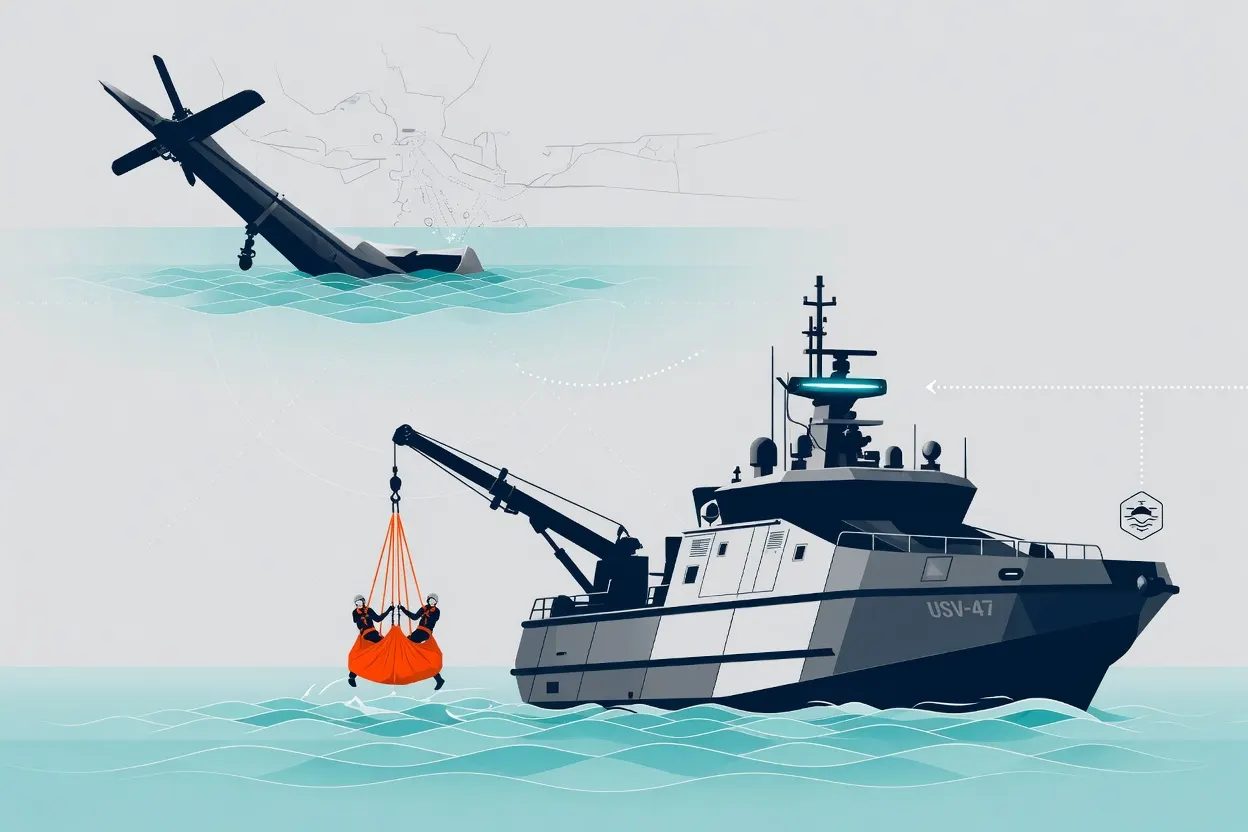
An uncrewed US Navy drone boat pulled two US Army Apache helicopter crew members out of the water near the Strait of Hormuz, marking the first time an autonomous surface vessel has rescued personnel at sea.
The Army helicopter went down near one of the world's most strategically consequential waterways. A US Navy uncrewed surface vessel responded and extracted both crew members to safety. How the drone boat was directed during the rescue — fully autonomous, remotely supervised, or some combination — has not been publicly disclosed.
Uncrewed surface vessels have accumulated years of sea trials and press releases without much to show in real-world stakes. This rescue changes that calculus: a USV performed a mission that would previously have required putting another crewed vessel and its sailors in harm's way. The Strait of Hormuz is not a forgiving test environment, and pulling this off there makes the case for wider USV deployment harder to dismiss than any controlled exercise could.
The Pentagon has poured money into uncrewed systems across air, land, and sea for years, with results that range from genuinely impressive to quietly shelved. This one lands in the win column — though the operational details that would let anyone assess what the system actually did on its own remain out of public view.