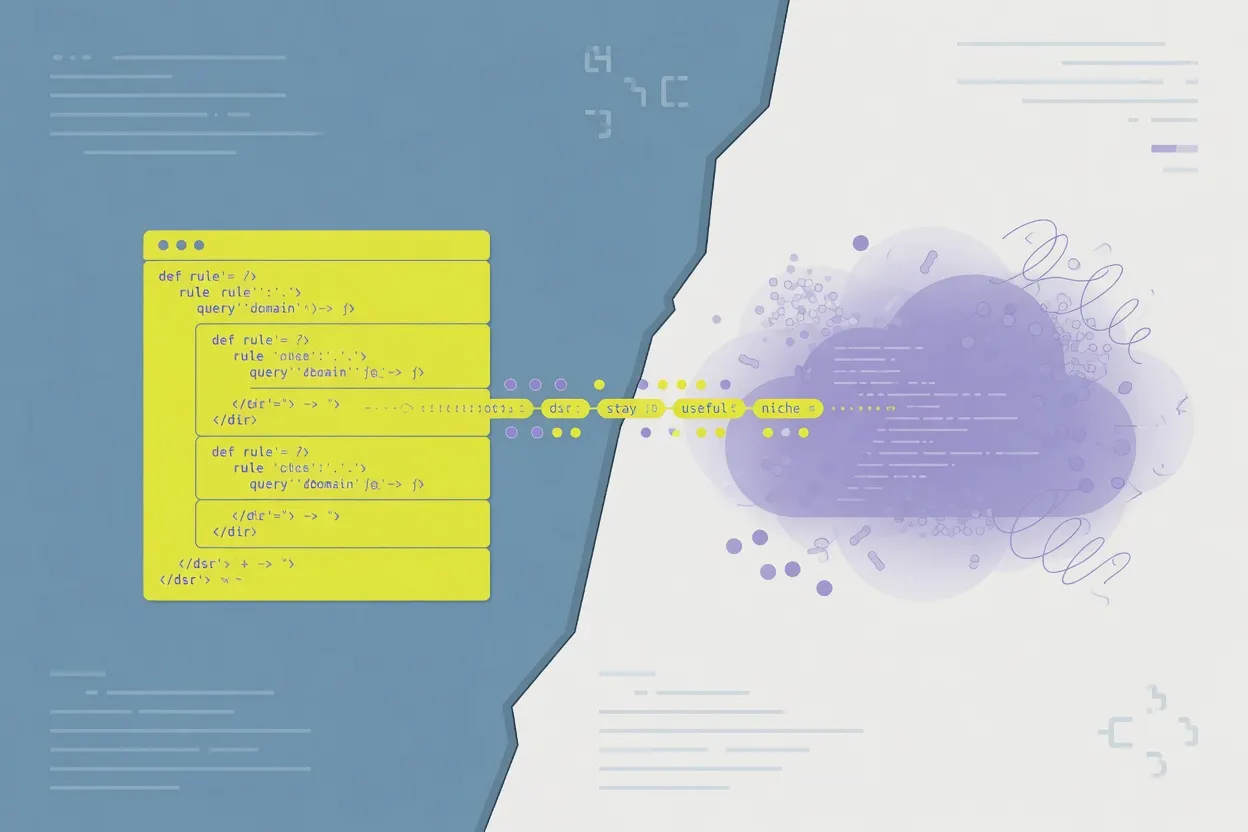
A developer published a piece last week asking how a new DSL can stay relevant when large language models increasingly do the translation work that domain-specific languages once owned.
The post poses the question directly: how does a newly built DSL survive when LLMs are eroding the category's core value proposition? Domain-specific languages (purpose-built syntax designed for a particular problem space rather than general computation) have traditionally justified their learning curve by letting domain experts express intent precisely without picking up a full programming language. The piece acknowledges the pressure without abandoning the premise. It drew five points and no comments from the developer community, which is its own kind of data point.
The tension is real. LLMs can now take plain-language instructions and return working code, which undercuts one of the most common arguments for building a DSL in the first place. Whether there is a remaining floor of precision, verifiability, and determinism that natural language interfaces cannot reliably provide is a genuinely open question.
"May survive" is a cautious framing for something you just shipped, and a useful reminder that the category is defending ground it used to take for granted.