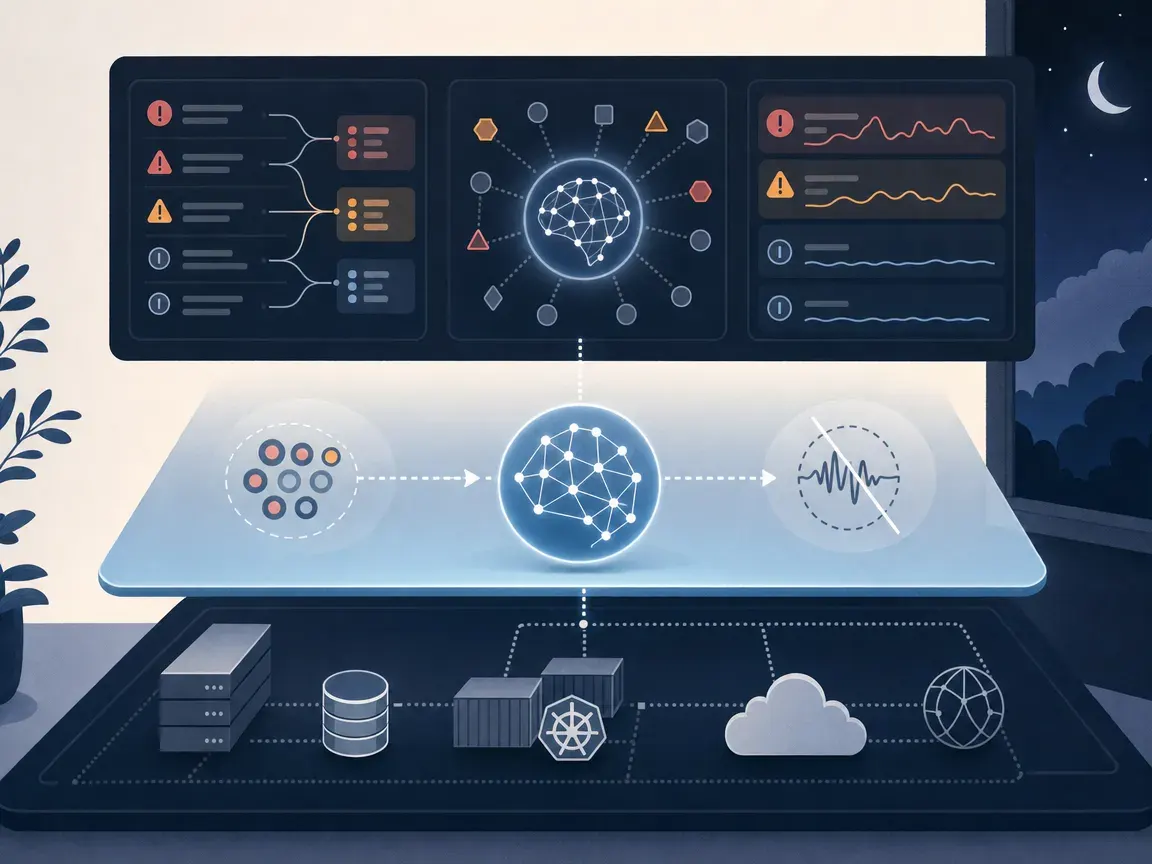
A bad Kubernetes upgrade in the middle of the night turned into an open-source project.
Nightwatch is a local-first, read-only layer that sits on top of whatever monitoring you already run. It groups alert floods into coherent incidents, flags checks that fire too often to be useful, and can hand control to an AI agent that investigates the live environment directly. The architecture places small agents — the author calls them owls — inside each environment so credentials never leave the local system. The only outbound connection is to a central coordinating process, which means no inbound hole into production. Incident clustering and recommendations run entirely offline, with no LLM involved; the model is only summoned when an engineer needs natural-language help piecing together what broke.
The read-only constraint is the most deliberate design decision here. The author wrote plainly that they don't trust the agent near production yet, and recommended readers adopt the same skepticism. That puts Nightwatch in a different category from the AI ops tools currently promising autonomous remediation — the ones that will, they say, detect the problem, diagnose it, and roll back the deploy while you sleep. Nightwatch's job is to give the on-call engineer a head start, not a replacement.
The autonomous ops space is filling up fast, and most entrants lead with the boldest possible claim. An AI SRE that advertises its own limitations is either a refreshing dose of honesty or a feature not yet built — possibly both.