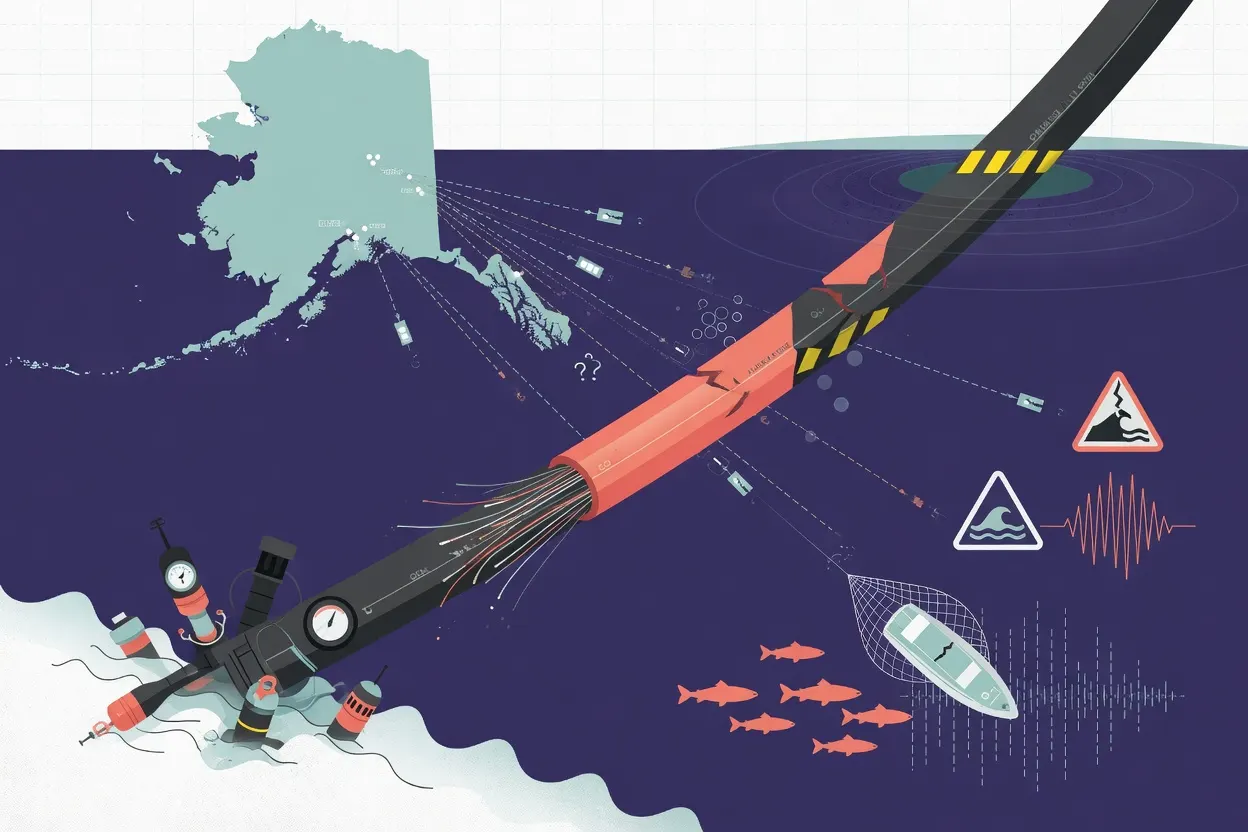
The NSF is pulling the plug on a nearly $368 million deep-ocean monitoring network that Alaska's fishing industry, coastal planners, and the military depend on.
The National Science Foundation announced in May it would decommission the Ocean Observatories Initiative, a network of underwater instruments that measures ocean chemistry, wave action, water temperature, and salinity in real time. The system was not a research prototype — it had become operational infrastructure. Fishery managers use its data to set catch limits. Coastal hazard planners rely on it for early warning of dangerous wave conditions. Even the military taps it, though the announcement did not elaborate on how.
Alaska stands to lose the most. It is the country's top fish-producing state, and its waters are warming at roughly twice the global average rate — which makes real-time ocean data more valuable now than when the OOI was built, not less. A misread marine heatwave, or a fish-stock estimate off by a meaningful margin, translates into millions of dollars in economic damage and years of regulatory fallout.
The case for cutting the network has to be budgetary, because the scientific case for keeping it has only gotten stronger. Walking away from a $368 million investment at the exact moment ocean temperatures are setting records and salmon runs are growing less predictable is the kind of decision that tends to look worse in hindsight than it does in a budget spreadsheet.