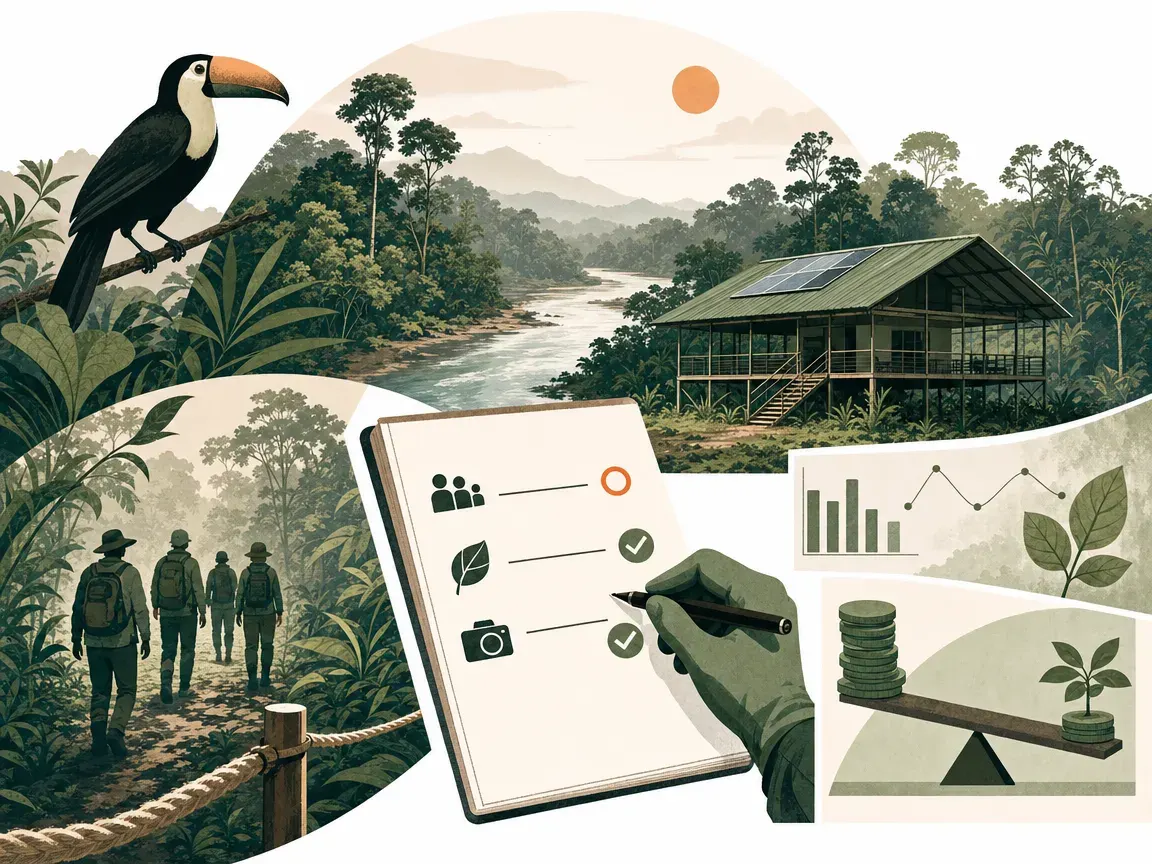
An Amazon research station is making the case that ecotourism doesn't have to be a contradiction in terms.
A citizen science organization operating in the Peruvian Amazon has structured its model around an uncomfortable question: does ecotourism actually protect the ecosystems tourists come to see, or just charge admission to them? The station brings paying visitors in to conduct field research — species surveys, biodiversity monitoring, data collection that professional scientists need but rarely have enough hands to complete. Revenue from those visits funds the station's conservation operations directly. The goal is to close the loop between tourist dollars and measurable environmental outcomes, rather than leaving it as an article of faith.
Most ecotourism works on the honor system. The lodge claims the proceeds go toward conservation, the brochure features a jaguar, and guests leave feeling good about the carbon offset they didn't calculate. Tying visitor activity to verifiable scientific output changes that dynamic, at least in principle: if the research is happening, the claim is checkable. In a region where deforestation and extractive industries continue to erode habitat, models that generate both data and funding may prove more durable than the solar-panel-and-composting variety.
The honest caveat is that this is one station, in one corner of the Amazon. Whether the model survives at scale — without diluting the science, the experience, or both — is a harder test than any single field season.