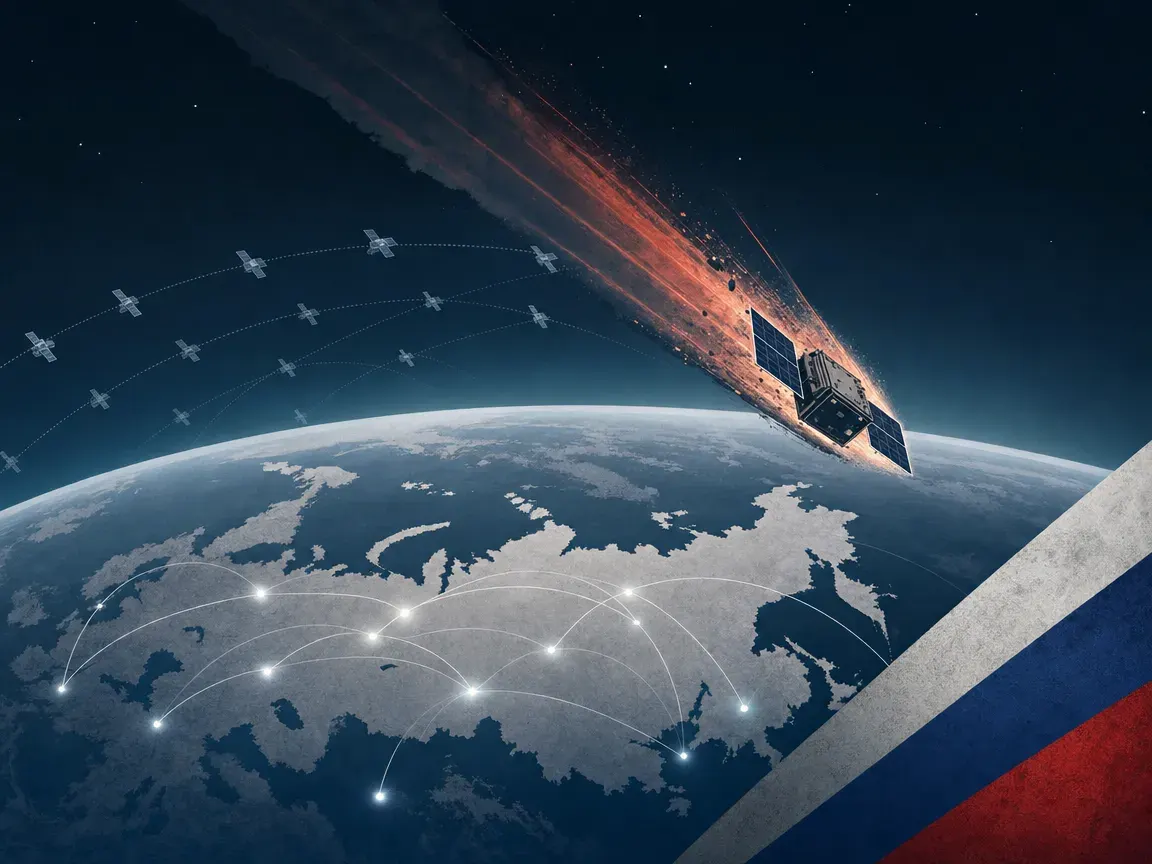
One satellite from Russia's fledgling Rassvet broadband constellation has already fallen back to Earth, barely weeks after its first operational batch launched.
Object 4, one of 16 satellites in Rassvet's initial deployment, re-entered the atmosphere around June 6th. The other 15 remain in orbit. Russia has pitched Rassvet as its domestic answer to Starlink, a low-Earth-orbit broadband network it would control outright rather than sourcing from foreign providers it can no longer count on.
Losing one in sixteen satellites this early is a different kind of problem than an established constellation would face. Starlink can absorb individual failures across thousands of spacecraft; Rassvet is working from a much thinner margin. A 6 percent attrition rate before the network is even operational is a harder number to dismiss, and there is no indication Russia has the launch cadence to backfill losses quickly.
Russia has announced ambitious targets for Rassvet, including eventual nationwide broadband coverage. Fifteen satellites and one early re-entry in is a modest foundation for that promise.