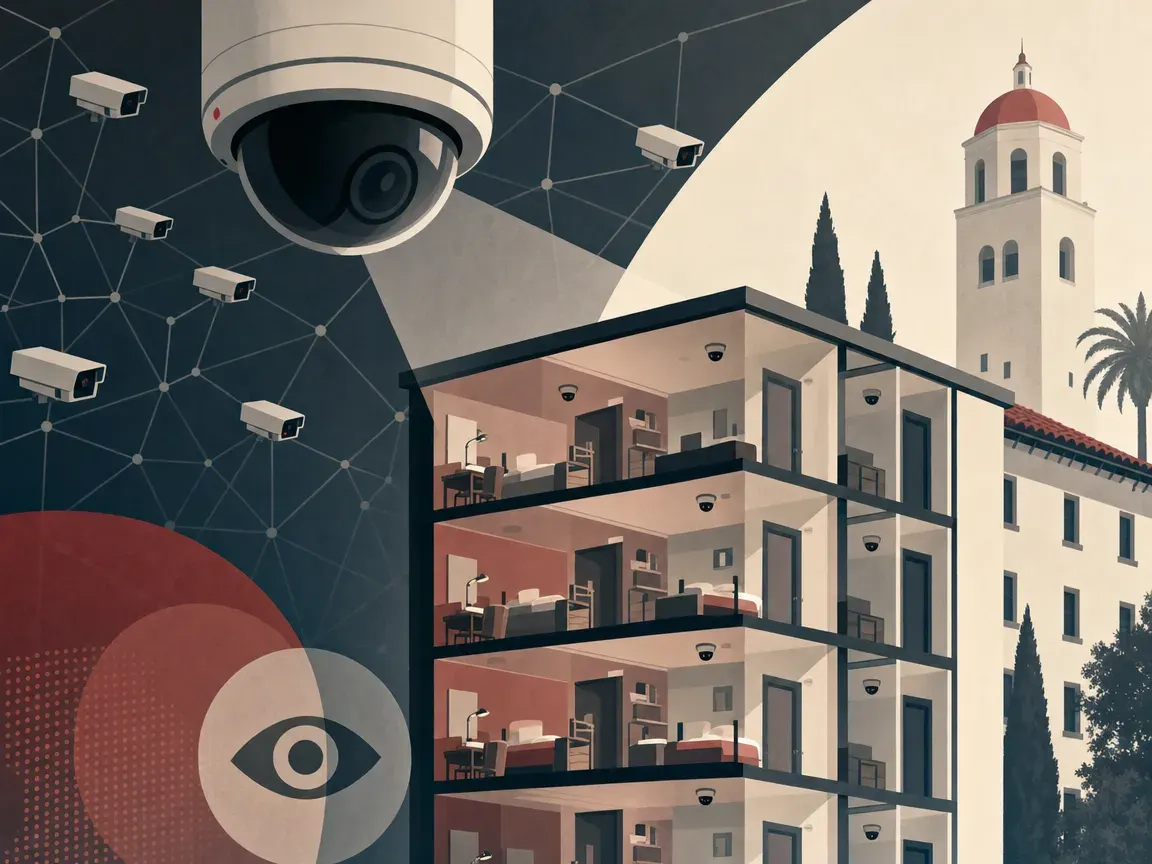
San Diego State University quietly rolled out 1,300 AI-enabled cameras across its campus, including 330 units inside student dormitories, without disclosing the surveillance to residents.
The cameras went in without a public announcement or apparent notice to students living in the affected housing. The dorm-specific units are the focal point of concern: unlike a lobby or a parking structure, student housing carries a higher expectation of privacy. The "AI" label on the hardware typically signals on-device analytics beyond simple recording — motion classification, object detection, or behavioral flagging. SDSU has not publicly explained what those analytics capture or who can request access to the footage.
That gap is the real story. Dormitories are where students live, not just where they study, and deploying AI-enhanced surveillance there without informed consent is a different category of decision than adding cameras to a quad. Privacy law in most U.S. states hasn't caught up to what "AI camera" actually means, which gives institutions wide latitude to act — and wide latitude to avoid explaining themselves.
At least a dozen U.S. universities have expanded their camera networks in recent years — SDSU isn't unusual for watching students, just for not mentioning it.