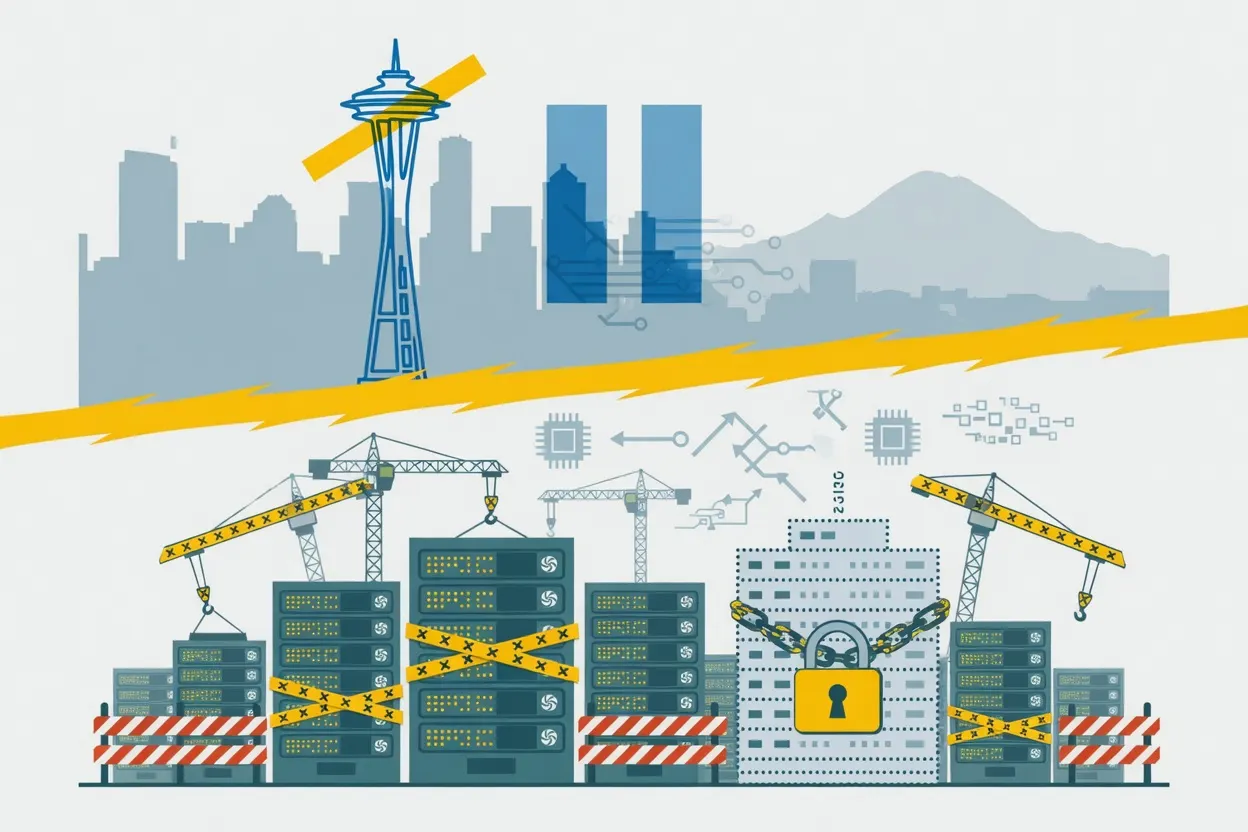
Seattle has put new AI data centers on hold for at least twelve months.
The Seattle city council voted to impose a moratorium on new data center construction in and around the city. The move is explicitly a pause — not a permanent ban — giving regulators time to write enforceable rules around energy consumption, water use, and community impact before approving more projects. The sentiment driving the vote was blunt: residents and officials argued the facilities draw enormous power and generate relatively few local jobs, offering the city little in return for hosting them.
A moratorium from a major tech-industry city carries more weight than the same vote from, say, a rural county that simply doesn't want the noise. Seattle is home to Amazon, Microsoft's cloud operations, and a dense ring of supporting infrastructure. If that city's government decides data centers don't pay their way, the argument has credibility that smaller jurisdictions can borrow. It also signals that the industry's assumption — that tech cities are always open for more tech infrastructure — is no longer safe to make.
The moratorium follows a pattern of local governments playing catch-up with infrastructure that arrived faster than zoning law. Virginia's Northern Virginia corridor has faced similar pressure over grid strain; parts of Ireland effectively stopped approving new data centers for years over electricity concerns. Seattle's version adds water use and community benefit to the checklist. Whether the moratorium survives twelve months intact, or gets quietly renegotiated after industry lawyers get involved, is a separate question — but the vote itself is a data point the sector would rather not have.