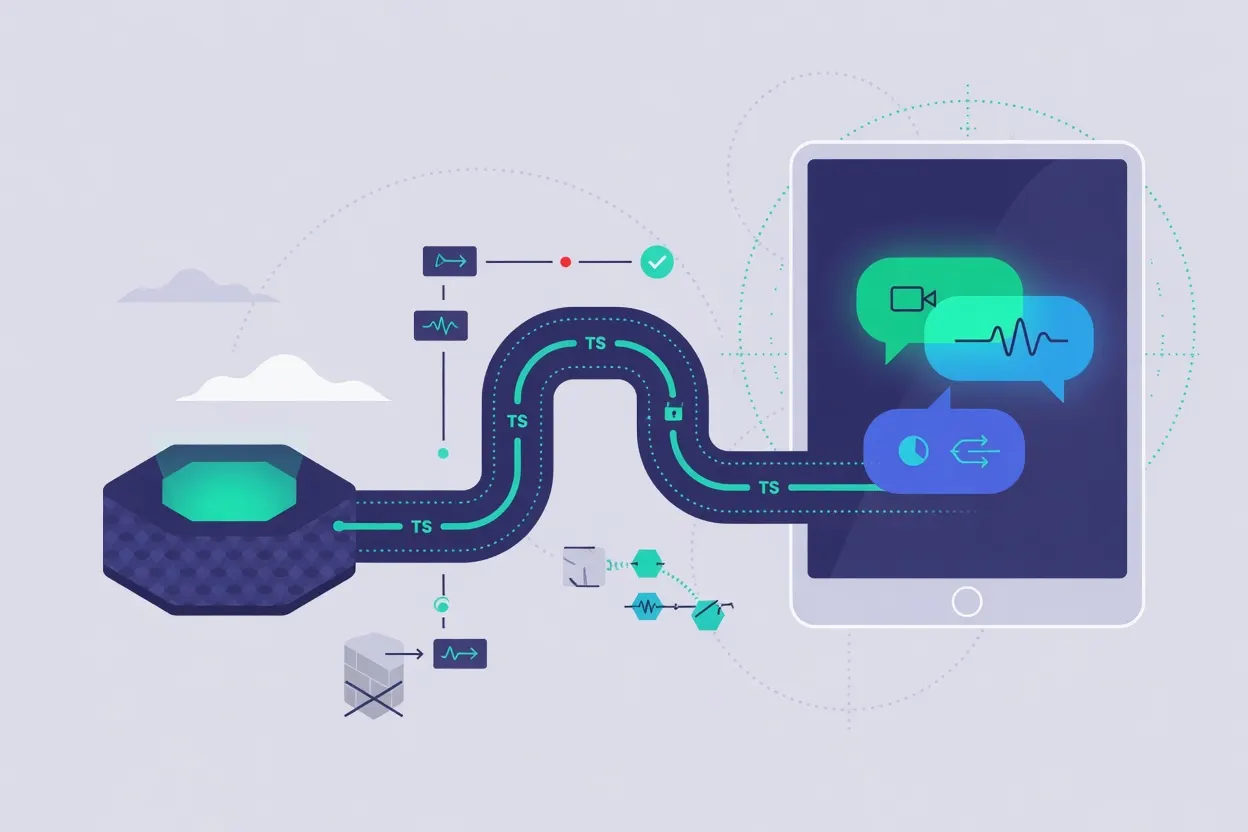
A developer published a debugging post-mortem this week tracing a stubborn WebRTC connection failure to a single iPad quietly running Tailscale.
WebRTC relies on a process called ICE (Interactive Connectivity Establishment) to negotiate a direct path between peers. It does this by collecting candidates: IP addresses and ports from every active network interface on a device. Tailscale, the popular WireGuard-based mesh VPN, adds its own virtual interface when running, injecting additional addresses into that candidate pool. The result is that WebRTC sees routes that look plausible but behave unpredictably, and tracing the failure back to the VPN interface is rarely a developer's first instinct.
The lesson matters beyond this one debugging session. Tailscale has quietly become a default tool in developer workflows, making remote access to private networks nearly frictionless. That ease of use carries a hidden cost: the VPN reshapes a device's entire network stack, and not every application accounts for it. WebRTC, designed around direct peer-to-peer connectivity and NAT traversal, is particularly sensitive to that kind of interference.
The post collected 10 points and 5 comments on Hacker News, which is probably the right scale for debugging knowledge this narrow. It gets bookmarked by exactly the three developers who need it next.