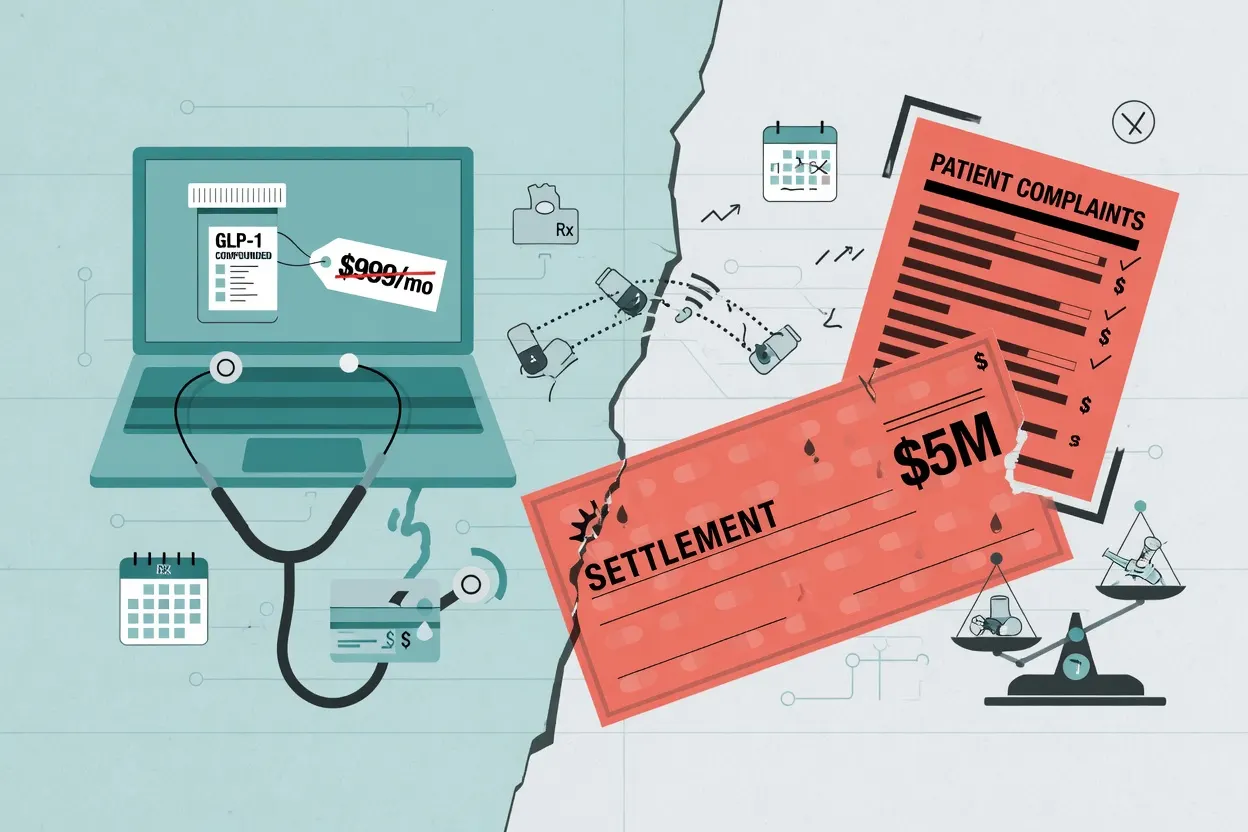
A telehealth network selling compounded GLP-1 medications kept ripping off customers even after being required to pay $5 million back to those same customers under a federal settlement.
The company sells compounded versions of GLP-1 drugs, the class that includes semaglutide and tirzepatide, marketed under brand names like Ozempic and Zepbound. Customers allege they were charged and then poorly served or simply ignored. The company had already settled with the US government, with $5 million going directly to affected clients. According to ongoing customer complaints, the behavior did not stop.
The compounded GLP-1 market grew fast and in unpredictable directions. When the FDA permitted compounding pharmacies to manufacture these drugs during a documented drug shortage, it created an opening that telehealth startups moved quickly to fill. Some operated cleanly; others appear to have treated a federal settlement as a line item rather than a course correction. Five million dollars in client refunds is real money, but it is not necessarily large relative to the revenue a national subscription-based GLP-1 service can generate.
Regulators eventually moved to close the compounding window as drug supplies normalized. If this case is any indication, some operators were not paying attention.