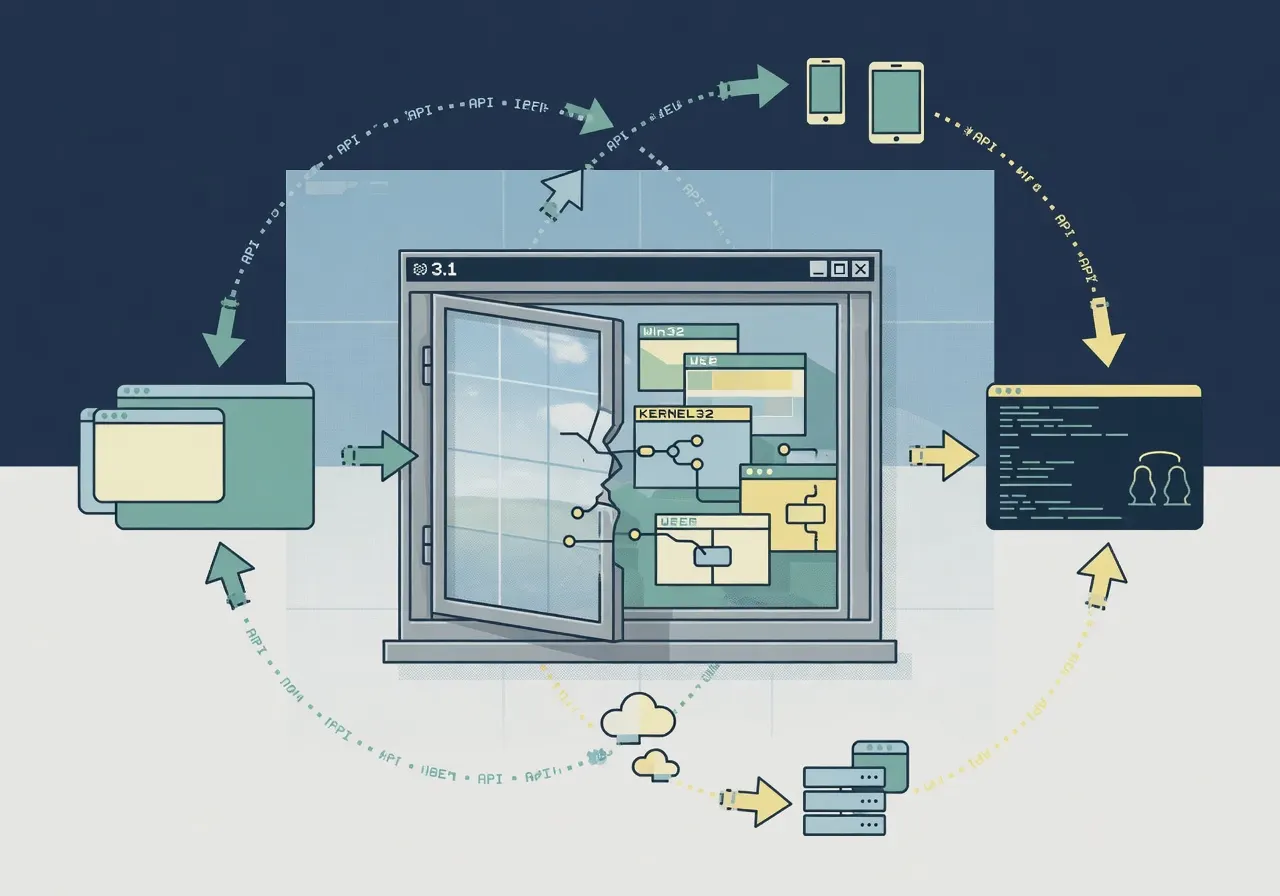
Windows developers built software on the Win32 API for decades. The API was synonymous with Windows itself — a closed ecosystem that only ran on Microsoft’s operating system.
That assumption has cracked. A new retrospective examines how the Windows API transformed into something developers can use on Linux, macOS, and beyond. The shift didn’t come from Microsoft. It came from compatibility layers and open-source projects that decoded Windows' core system calls and made them run elsewhere.
Wine, the Windows compatibility layer for Unix-like systems, has existed since 1993. But recent years brought more aggressive ports: projects that bundle Windows API headers and libraries for non-Windows targets, letting C and C++ developers compile the same code across platforms without rewriting system-level logic.
Why it matters: For legacy codebases still written against Win32, this opens an exit strategy that doesn’t require a full rewrite. Developers can now compile existing Windows-native code on Linux servers or macOS workstations. It’s not a perfect solution — graphics and DirectX dependencies still cause headaches — but the gap has narrowed.
The broader trend: APIs once tied to single platforms are increasingly portable. Microsoft’s own embrace of cross-platform development tools suggests the company sees the writing on the wall. The Windows API’s cross-platform success is less a victory lap and more a признание that lock-in has an expiration date.