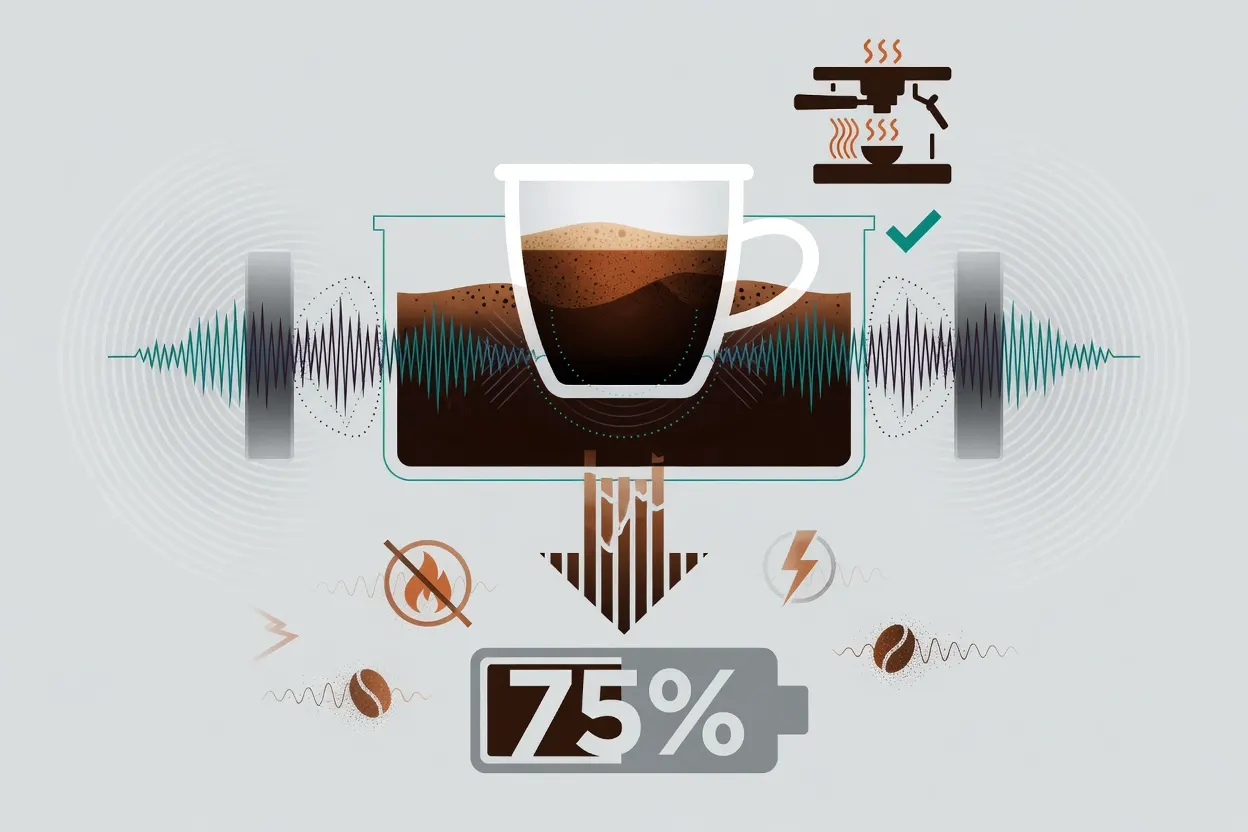
Researchers at UNSW Sydney built an espresso machine that replaces hot water with ultrasound — and a blind panel of 100 tasters couldn't tell the difference.
The team developed a process that pulses ultrasonic waves through room-temperature water and coffee grounds. The sound energy drives the same extraction that normally requires heat, pulling out oils, acids, and aromatic compounds without a heating element. Energy consumption drops by up to 75% compared to conventional machines. In blind tests, tasters could not reliably distinguish an ultrasonic shot from a hot-brewed one.
Espresso machines are among the more power-hungry kitchen appliances — a typical home portafilter machine pulls 1,000 to 1,500 watts per brew cycle, and commercial units run harder. A 75% reduction without a detectable drop in cup quality is a real number, not a marketing rounding. Eliminating the boiler also removes warm-up time, which is its own quiet annoyance for anyone who brews before they're fully awake.
This is peer-reviewed research, not a product launch. No commercial ultrasonic espresso machine exists yet, and the gap between a university prototype and a kitchen appliance shelf is exactly where most promising coffee technology goes to quietly stall.