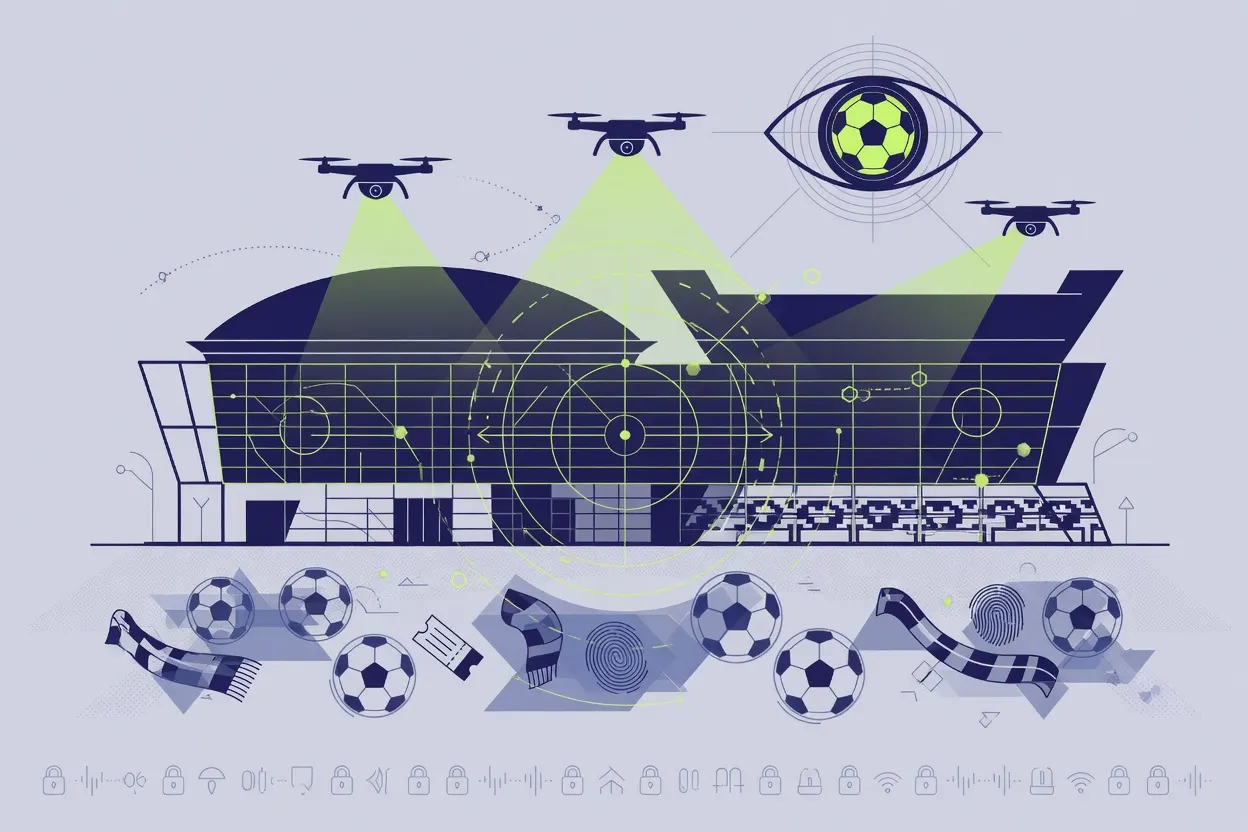
The 2026 World Cup is bringing face recognition and anti-drone technology to stadiums across the US, Canada, and Mexico — and fans are largely the last to know.
The tournament is rolling out a range of biometric and physical-security tools at host venues. Facial-recognition cameras and anti-drone systems are among the most visible deployments, but the full scope of what data is being collected remains opaque. Spread across three countries with distinct legal frameworks for biometric data, the event creates a patchwork of surveillance that varies depending on which stadium a fan walks into — and what country's laws govern that stadium.
Sporting mega-events have a long history of serving as test beds for surveillance technology that later migrates into airports, transit hubs, and public squares. The 2026 edition's footprint across three democracies makes it a more consequential experiment than the Qatar 2022 version — at least in principle, fans in the US, Canada, and Mexico have legal recourse that attendees in Doha did not.
Whether that recourse actually constrains what gets built and retained afterward is the question worth watching.