Lead story / ai
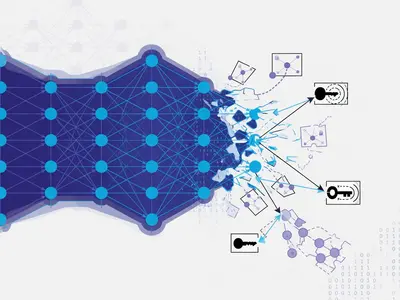
How Domain-Specific Abliteration Targets AI Safety Refusals
Researchers tested abliteration on 24 open-source LLMs and found they could strip cybersecurity-domain refusals without removing broader safety behavior.
The Revision reporting on Security — 1141 stories on the wire, decoded into one clear voice.
Researchers tested abliteration on 24 open-source LLMs and found they could strip cybersecurity-domain refusals without removing broader safety behavior.
A new multi-agent framework called SABRE uses uncertainty scoring to decide when to block ransomware automatically and when to escalate to an analyst.
An autonomous AI agent reportedly completed a full ransomware attack on its own, though researchers, targets, and methods remain unnamed.
Security firm Sysdig says it documented the first end-to-end ransomware attack executed entirely by an AI agent, with no human operator involved.
A new agentic framework pairs runtime contrast analysis with a reusable skill base to outpace existing automated vulnerability repair tools by a wide margin.
A new red-teaming agent called RedCoder probes code-generating AI over multi-turn chats to surface vulnerabilities that single-shot tests miss.
A new black-box methodology can detect whether an AI safety guardrail or the model itself triggered a refusal, with near-perfect accuracy.
Researchers built a method that embeds hidden triggers in speech models by leaking timbre data at the frame level, slipping past standard defenses.
New research finds that attacks fooling cybersecurity classifiers also destabilize the explanations analysts use to triage alerts.
A new attack embeds invisible backdoors in speech classifiers using reinforcement learning, and standard defenses like fine-tuning and pruning don't stop it.
A new agentic system built on historical audit reports caught every high-severity vulnerability in a benchmark of 11 DeFi projects — with zero false positives.
CyberPal 2.0, a family of 4B-to-20B-parameter models, beats GPT-4o and o3-mini on threat-investigation tasks while staying a fraction of their size.
A new stress-testing framework called FLAT shows that standard accuracy metrics can mask backdoor vulnerabilities that vary by trigger and target.
A new study shows gradient-based attacks can recover input text from a model's hidden states with up to 97.5% accuracy on short prompts.
A new study finds lightweight ML models for industrial network security collapse when tested on networks they were not trained on.
Researchers found that LLMs using function-calling can be manipulated by faking a moderation audit across multiple turns, bypassing prompt-level safety.
A new research paper maps out how locally deployed AI models on mobile devices open security gaps that cloud-based inference never had.
Security firm LayerX found that framing a credential-theft attack as a game fooled every AI browser it tested into leaking user passwords.
A 'BioShocking' attack manipulates AI agents by rewarding wrong answers, then redirects them to harvest sensitive login credentials.
A new attack called CoT Forgery fools LLMs into treating injected text as their own conclusions, pushing jailbreak success from near zero to 60%.
A new attack framework shows how the fuzzy matching that makes LLM caches fast also makes them exploitable for response hijacking.
Researchers built a graph connecting software vulnerabilities to MITRE ATT&CK tactics, giving defenders a structured map from bug to behavior.
Researchers have built a detection framework that finds and reconstructs backdoor triggers in large language models used as classifiers.
Researchers used curvature analysis to pinpoint and surgically repair the exact model weights responsible for backdoor behavior in large language models.
New research tested open-weight language models on PowerShell malware generation and found the output alarmingly close to the real thing.
A new 406-task benchmark found that malicious plugins in always-on AI agents had a 100% attack success rate, regardless of which language model powered them.
New research shows a website can trap an AI browser in a fabricated reality where its safety guardrails stop working entirely.
Apple says AI-accelerated attacks forced it to abandon its old scheduled patch cadence in favor of faster, standalone security updates.
A new benchmark tests 19 AI models on autonomous penetration attacks, with success rates reaching nearly 70% on realistic targets.
A new study finds that framing, anchoring, and author attribution can flip an AI security tool's verdict without changing a single line of code.
A new multi-agent framework called COHORT cuts the weeks-long manual process of hardening networks after a cyberattack down to an automated pipeline.
Researchers found that targeting high-entropy decision tokens can bypass safety guardrails in vision-language models and transfer across architectures.
Researchers built a two-stage attack that slips a target item to the top of AI-generated search rankings using natural-sounding text.
MESA ranks the communication channels most likely to be exploited in multi-agent AI systems, letting defenders focus scarce resources where it counts.
A new study finds AI vulnerability detectors can be fooled by author reputation, framing, and prior analysis results — not just by the code itself.
Researchers propose a multi-task AI framework that detects packed binaries, classifies malware families, and flags threats with a 97.4% combined detection rate.
New entropy-based framework spots intrusions using only flow-level stats, exposing blind spots that standard F1 scores quietly hide.
A new benchmark finds that connection-layer safeguards alone leave AI agent systems exposed, and proposes a tighter execution-control layer to close the gap.
A study of 96 fine-tuned small language models found that formal privacy guarantees add little beyond what simpler controls already achieve.
A new survey maps how AI agents create fresh attack surfaces while also powering the offense-defense lifecycle — and argues the two problems inform each other.
A new packet-level attack method evades neural network intrusion detectors at a 92.78% rate while keeping malicious traffic functionally intact.
A systematic review of 21 studies finds reinforcement learning has barely scratched the surface of actual vulnerability detection in C/C++ code.
Researchers demonstrate two reconstruction attacks that recover private training data from graph neural networks, even in black-box scenarios.
New research shows that corrupting an LLM agent's memory store is enough to flip its answers, even when the questions it receives are perfectly clean.
Federal authorities are offering $10 million for leads on a Russian intelligence-linked group that phished thousands of encrypted messaging accounts.
Apple's latest point release patches kernel and WebKit bugs that could expose data — and publishing the details raises the urgency to update now.
A third-party software flaw let hackers into KDDI's systems, exposing email and password data for millions of customers at six Japanese ISPs.
The GitHub Advisory Database published 1,560 reviewed advisories in May 2026 — five times its usual output — and still couldn't clear the backlog.
Mozilla's 0din team showed how AI coding agents can be manipulated into opening a reverse shell through a chain of innocent-looking setup steps.
A joint FBI and CISA advisory warns that Russian intelligence operatives are phishing Signal backup recovery keys, granting persistent account access.